Platform · Application layer

Energy Management

Software that optimizes. The layer customers evaluate first. Energy Management sits on Joule Junction OS — the digital layer across DC BUS, Metering, and control. Customers often evaluate this layer first because it is where forecasting, tariffs, and dispatch show commercial outcomes.

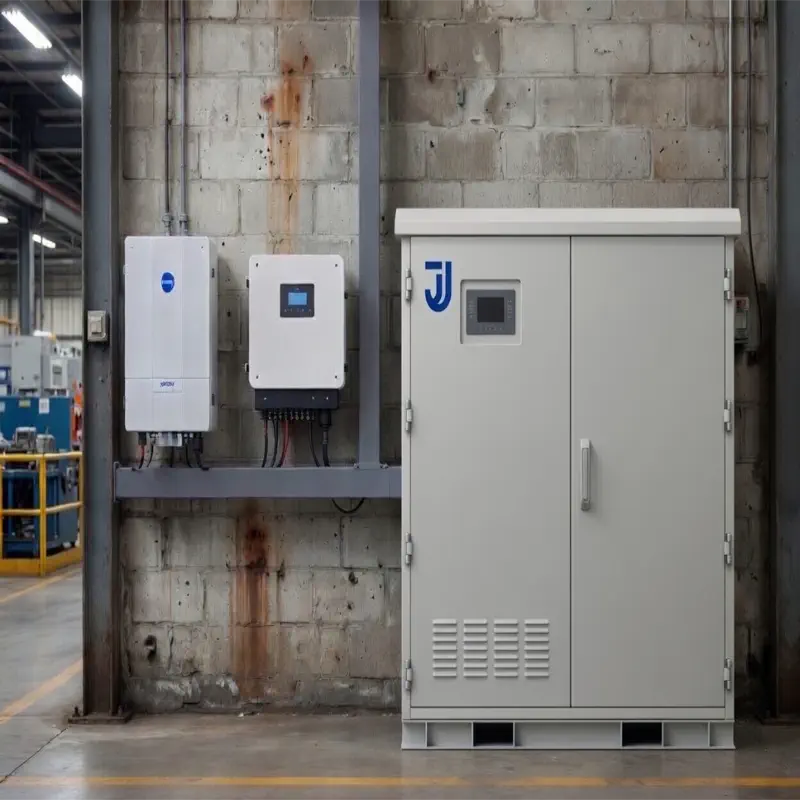
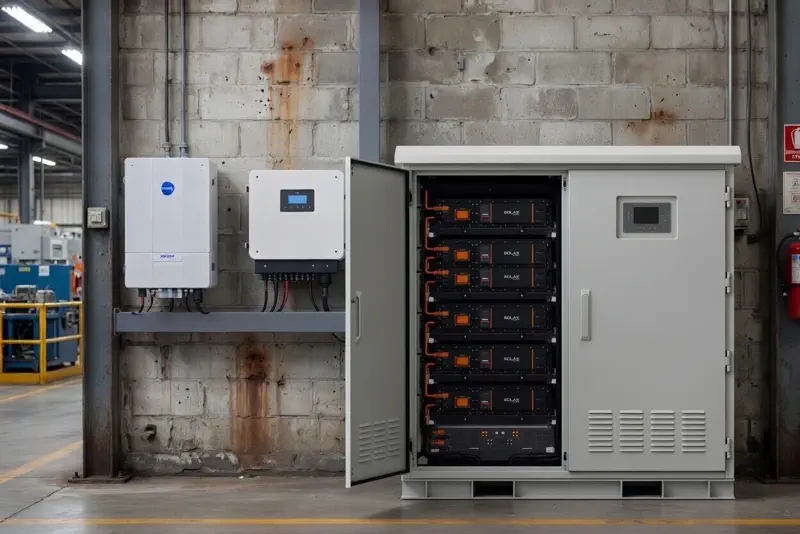
Switchgear in factory at Joule Junction — energy management infrastructure context

Why it matters

Hardware connects. Software decides.

The DC BUS connects everything. Metering measures everything. Without the optimisation layer, the stack is only infrastructure and data. Forecasting shifts battery dispatch before a price spike. Tariff optimisation targets demand charges. EV scheduling aligns charging with solar. VPP participation turns flexible load into a market resource.

Modules below describe the design target for the EMS application layer — continuous improvement of dispatch using open protocols already defined on the platform.

How it works

Measure → forecast → dispatch

Metering feeds the EMS. The EMS targets optimisation across generation, storage, loads, and chargers on the common DC architecture.

Metering · telemetry
Forecast · tariff · constraints
Dispatch · schedule · VPP
DC BUS · PCS · loads

Digital layer

Joule Junction OS

Native IEEE 2030.5 architecture. The digital layer across DC BUS, Metering, and Energy Management.

  • IEEE 2030.5 — Smart energy profile — DER, BTM, demand response, VPP.
  • OCPP 2.0.1 / 2.1 — EV charging communication.
  • ISO 15118-20 — V2X (V2G, V2H, V2L, V2B).
Modules

What it is designed to optimize

From the platform Energy Management definition.

  • Forecasting — solar generation, load, price signals
  • Tariff optimisation — time-of-use, demand charges
  • Battery optimisation — charge/discharge scheduling
  • Solar optimisation — self-consumption vs export
  • EV scheduling — fleet charge management
  • Load shifting — peak shaving, demand response
  • Carbon reporting — scope 1/2 tracking, compliance
  • AI optimisation — continuous dispatch improvement
  • Multi-site management — portfolio-level visibility
  • VPP participation — DER aggregation, market bidding
  • ISO 15118-20 V2X control — V2G, V2H, V2L, V2B

Buyer lens

How buyers think about EMS

Architecture supports these commercial patterns — outcomes depend on site, tariff, and market rules.

Demand charge avoidance
Predict windows where load may spike. Target battery dispatch to reduce peak import relative to contractual demand charges.
Grid upgrade deferral
When a site needs more usable power but the connection is constrained, EMS is designed to cap import at the contractual limit while on-site solar and storage serve additional load on the DC BUS.
VPP participation
Flexible load and storage can participate in DER aggregation and market programs where rules allow. Participation targets IEEE 2030.5-native metering at every relevant point.

Standards

Protocols under the application layer

IEEE 2030.5OCPP 2.0.1 / 2.1ISO 15118-2 / -20IEC 62443

Evaluating energy management for your site?

Talk with Joule Junction about forecasting, dispatch, and open DC architecture.