
Technology

800V DC

AC distribution was designed for one-way power from central generation. Distributed energy needs a different backbone.

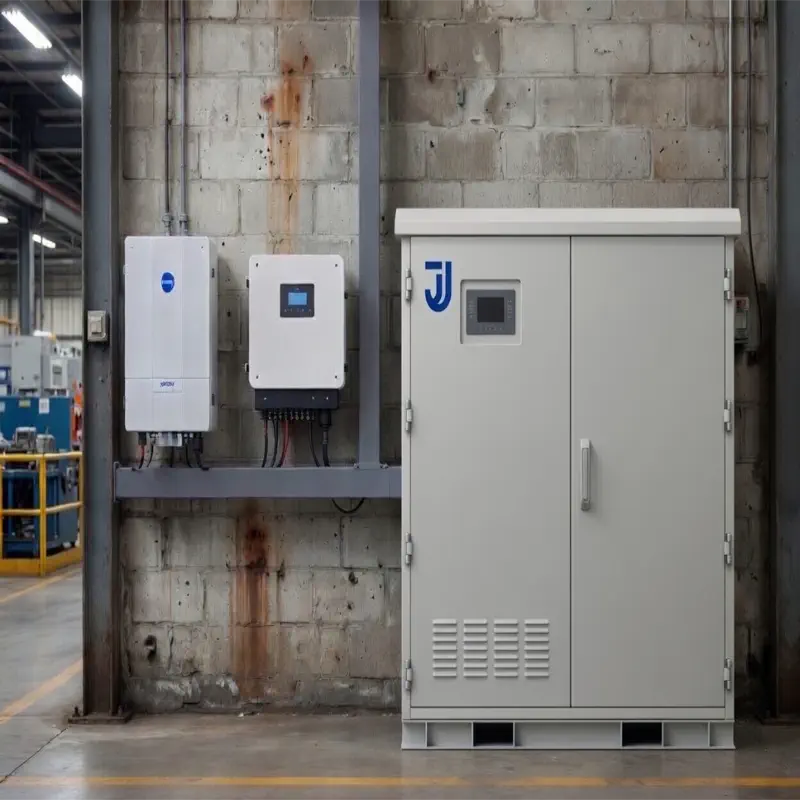
Industrial switchgear at Joule Junction — 800V DC platform context

The problem

Passive AC was never designed for distributed energy

Solar, storage, fleet charging, heat, and edge compute all want bidirectional, multi-source power. Layering AC/DC converters at every device multiplies loss, cost, and complexity.

  • Electrification: Fleets, heat, industrial processes moving from fuel to electricity. Every new load needs infrastructure.
  • AI load growth: GPU racks at 400 kW–1 MW make 54V distribution physically non-viable. 800V DC is the only path.
  • Grid congestion: Connection queues stretching years. The bottleneck is distribution, not generation.

The physics

Voltage is freedom

Higher voltage means lower current for the same power. Lower current means smaller conductors, less voltage drop, and fewer conversion stages between sources and loads. A shared DC bus is designed so generation, storage, and loads meet on one voltage plane instead of translating through AC at every endpoint.

Power electronics — not copper and iron alone — make medium-voltage-class DC distribution practical at commercial scale. The DC BUS is the physical backbone of that approach:The physical DC backbone. SST, BusWay, PCS, protection, and grid interface in one architecture — current flagship 800 V DC.

Architecture

What sits on the DC BUS

Components designed as one system — not a loose catalogue of AC gear.

  • Solid State Transformer (SST)
  • DC BusWay
  • Power Conversion System (PCS)
  • Protection, controls
  • DC arc protection — native DC arc detection, digital protection relays

Grid interface capabilities designed into the stack include:

  • Grid-forming PCS
  • Grid-following PCS
  • Export limiting
  • Dynamic connection management
  • Volt/VAR optimisation
  • Frequency response
  • Black start capability
  • Utility interoperability

Comparison

Why sites re-think the backbone

Illustrative architecture differences — not a product performance guarantee.

FactorShared DC busLegacy AC distribution
Conversion stagesPrimarily at grid edgeOften 3–5 per DER path
Bidirectional flowNative to architectureRequires added inverters
Conductor sizingFavoured by higher V / lower ILarger for same power at lower V
ExpansionTap onto common busNew cable runs per load

Designing for 800V DC?

Talk with Joule Junction about architecture, scale, and site constraints.